When Grief Began Before Goodbye — and Continues After Loss
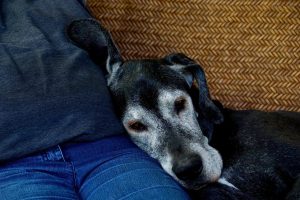
Many grieving dog parents are surprised to learn that part of what hurts so deeply after their dog’s death actually began long before it.
If your dog was elderly, chronically ill, or declining, you may have already lived months—or even years—in a state of watchfulness, worry, and preparation. You loved them while bracing yourself for loss. You monitored symptoms, gave medications, asked hard questions, and quietly said goodbye in pieces.
When your dog passed, the grief didn’t begin.
It continued.
And now, without your dog beside you, all of that anticipatory grief has nowhere to land.
 When the Caregiving Ends, but the Grief Intensifies
After loss, many caregivers experience a sudden sense of collapse.
The routines that once filled your days—medications, feeding schedules, vet visits, monitoring every breath—disappear overnight. What remains is silence, absence, and a painful question:
Who am I now, without them needing me?
You may feel:
- An overwhelming emptiness where responsibility once lived
- Restlessness or anxiety with nowhere to put it
- A sense of being adrift
- Deep loneliness in the quiet
This doesn’t mean you relied on your dog in an unhealthy way.
It means your love had an outlet—and now it is searching for one.
 The Guilt That Often Follows
Anticipatory grief after loss often brings a specific kind of guilt—one that is quiet, relentless, and deeply personal.
You may find yourself thinking:
- Was I late giving medication that one time?
- Did I miss a sign that something was wrong?
- Did my worrying take away from the time we had left?
- Did preparing myself for goodbye somehow bring it closer?
These thoughts are incredibly common—and incredibly painful.
But here is a truth that deserves to be said clearly:
Anticipating loss does not cause it.
Worry does not invite death.
Preparation does not shorten love.
What you were doing wasn’t giving up—it was protecting your heart while protecting them.
 Mourning the Time Spent Worrying
Many grieving pet parents carry a quiet regret after loss:
I wish I had worried less and lived more.
This doesn’t mean you failed your dog.
It means you are human.
Living with uncertainty is exhausting. Preparing for loss is emotionally draining. And hindsight is always gentler than the moment you were actually in.
You loved your dog the best way you knew how at the time you were in—and that includes the worrying, the preparing, the hoping, and the fearing.
None of that diminished your bond.
 Why This Grief Can Feel Especially Heavy
Anticipatory grief after loss often feels heavier because:
- You are grieving both the past and the future you had already begun mourning
- You are exhausted from caregiving before grief even begins
- You may feel relief mixed with heartbreak — and feel guilty about that too
- Your identity as a caregiver ended abruptly
These mixed emotions are not a sign of confusion—they are a sign of deep devotion.
 Finding Your Footing Again
Processing anticipatory grief after loss is not about erasing guilt—it’s about making peace with love in its most vulnerable form.
Gentle ways to begin:
- Acknowledge the caregiver role you held with honor
- Speak to yourself the way you would to a loved one in the same situation
- Write down what you did do for your dog—especially when doubt appears
- Allow moments of rest without assigning meaning to them
- Let worry give way to remembrance, slowly and naturally
There is no rush here.
 A Final Reassurance
If you loved an aging or ill dog, you likely grieved twice:
once in anticipation, and once in absence.
Neither grief was misplaced.
Neither was harmful.
Both came from love.
You did not cause their death by preparing for it.
You did not waste time by worrying.
You did not fail them.
You walked with your dog through uncertainty, care, and ultimately, love.
And now, you are allowed to grieve — fully, honestly, and gently — without blame.
 © 2025 Gracie’s-Garden Daphne Newman All Rights Reserved