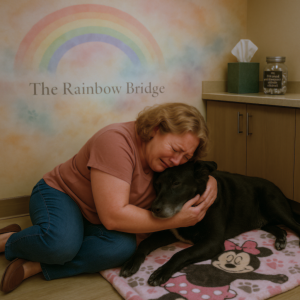
Losing a dog unexpectedly — whether through accident, acute illness, sudden collapse, anesthesia complications, or unpredictable events — is one of the most shocking forms of grief a person can experience.
One moment everything is normal.
The next, the world is unrecognizable.
Sudden loss doesn’t give you a chance to prepare, say goodbye, or make sense of what’s happening. It tears away both the present and the future in an instant, leaving you emotionally breathless.
This kind of grief is different — not harder or easier, simply different.
 Why Sudden Loss Hurts So Deeply
When loss comes without warning, your mind and body are thrown into:
- Shock
- Disbelief
- Confusion
- Physical trembling
- Panic
- Replay of the moment again and again
- A crushing sense of “this can’t be real”
This is not overreaction.
It is trauma.
Your brain had no time to prepare, no time to adjust, and no time to understand. Grief and shock arrived at the same moment, leaving you emotionally overwhelmed.
You might feel:
- Why did this happen?
- How is this real?
- I should’ve done something differently.
- I didn’t get to say goodbye.
Every one of these thoughts is a natural response to an unnatural moment.
 The Weight of No Goodbye
One of the hardest parts of sudden loss is the absence of closure.
You may feel robbed of:
- One more hug
- One more look
- One more “I love you”
- One more day together
- The chance to comfort them at the end
Please hear this gently:
Your dog did not leave your love behind.
They carried it with them.
Goodbye is not defined by timing —
it is defined by the depth of your bond.
 Common Emotional Reactions to Sudden Loss
Sudden loss may bring:
- Intense guilt (“If only I had…”)
- Anger at circumstances
- Fear of forgetting the last moments
- Inability to accept what happened
- Physical symptoms like shaking, nausea, difficulty breathing
None of this means you’re failing to cope.
It means your heart is trying to make sense of the unimaginable.
 When Sudden Illness Is the Cause
A dog can appear fine one day and decline rapidly the next from:
- Internal bleeding
- Organ failure
- Tumors
- Heart issues
- Seizures
- Toxic exposures
- Complications under anesthesia
These situations leave people questioning everything.
But you had no control over the illness that was hidden, silent, or faster than love could act.
You did the best you could with the knowledge you had.
 How to Support Yourself Through Sudden Loss
- Don’t pressure yourself to “understand” right away
- Allow shock to be shock — it protects you until you can breathe again
- Share the story with someone who won’t judge or minimize
- Stop replaying the moment when you can’t handle it — redirect gently
- Write a letter to your dog if a goodbye was not possible
- Sit in quiet remembrance without forcing calm
Most importantly:
The lack of preparation does not diminish your love.
Sudden loss is not your failure.
Your grief is valid because your love was real.
 A Final Note
Sudden loss changes you. It shakes the foundation of safety and predictability. But it also reveals something unbreakable:
Your dog mattered deeply —
and their love is still yours.
This grief will soften with time, but the love will not.
You are not alone as you navigate this shock, this pain, and this longing.
Their story continues through you.
 © 2025 Gracie’s-Garden Daphne Newman All Rights Reserved